Jordan | Design and Fabrication of Storage Tanks (API 650)
Jordan | Design and Fabrication of Storage Tanks (API 650)
- Starts: December 13, 2026
- Ends: December 17, 2026
COURSE OVERVIEW
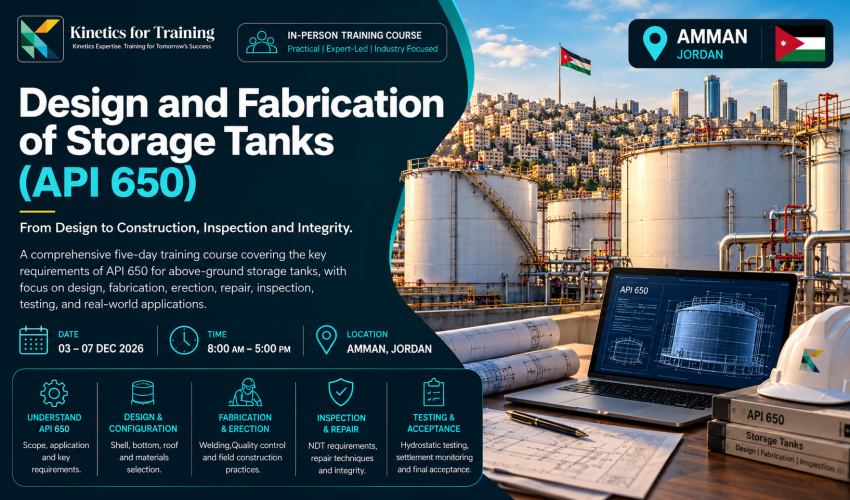
Above-ground storage tanks are essential facilities in the oil, gas, petrochemical, and chemical industries, where safe containment and structural integrity are critical. This five-day training course provides a practical and comprehensive introduction to the key requirements of API 650 – Welded Tanks for Oil Storage, covering the major engineering, fabrication, erection, repair, inspection, and testing considerations for atmospheric storage tanks.
The course focuses on fundamental principles of storage tank design, including material selection, shell and bottom design, roof configurations, wind and seismic considerations, nozzles and appurtenances, and corrosion protection. It also addresses practical aspects of tank fabrication and field erection, including welding, quality control, non-destructive examination, repair of damaged or deteriorated areas, hydrostatic testing, and settlement monitoring.
Through technical presentations, practical examples, discussions, and case studies, participants gain a clear understanding of how API 650 requirements and related industry practices are applied throughout the lifecycle of a storage tank, from initial design through fabrication, construction, repair, inspection, testing, and final acceptance.
TARGET AUDIENCE
- Mechanical Engineers
- Civil and Structural Engineers
- Tank Inspectors
- QA/QC Engineers and Inspectors
- Fabrication and Construction Supervisors
- Welding Engineers and Inspectors
- Maintenance and Integrity Engineers
- Project Engineers and Project Managers
- Technical Consultants involved in oil, gas, petrochemical, and chemical facilities
COURSE OBJECTIVES
After completion, participants will be able to:
- Understand the scope, application, and fundamental requirements of API 650.
- Identify major components and configurations of above-ground storage tanks.
- Select appropriate materials based on service conditions and design requirements.
- Understand basic design principles for tank shells, bottoms, and roofs.
- Apply fundamental principles of shell thickness calculations.
- Evaluate fixed and floating roof configurations.
- Understand wind, seismic, and stability considerations.
- Identify requirements for nozzles, manways, and major appurtenances.
- Understand principal fabrication, welding, and erection requirements.
- Understand basic principles of storage tank repair, including cutting, plate replacement, and repair welding.
- Identify key inspection and NDE/NDT requirements for fabrication and repair activities.
- Understand corrosion protection and internal lining considerations.
- Understand hydrostatic testing, settlement monitoring, and final tank acceptance.
- Recognize the relationship between new tank construction requirements and repair/inspection practices for existing tanks.
COURSE OUTLINE
DAY 1 – API 650 FUNDAMENTALS, TANK CONFIGURATION & MATERIALS
Introduction to API 650 Storage Tanks
- Scope and application of API 650
- Basic design philosophy and terminology
- Types and applications of above-ground storage tanks
- Major tank components and functions
- Design conditions and tank data requirements
- Relationship between API 650 and other relevant industry standards
Tank Configurations
- Fixed-roof storage tanks
- Cone and dome roof configurations
- Open-top tanks
- External and internal floating roof tanks
- Selection of tank configuration based on service requirements
Materials of Construction
- API 650 material requirements
- Material selection and service conditions
- Design temperature and material toughness
- Corrosion allowance
- Material certification and traceability
Practical Discussion
- Review of a typical API 650 tank data sheet
- Identification of major tank components
- Selection of appropriate tank configuration for different products
DAY 2 – SHELL, BOTTOM & ROOF DESIGN
Shell Design
- Shell construction and shell course arrangement
- Hydrostatic pressure and liquid loads
- Shell thickness requirements
- One-Foot Method
- Variable Design Point Method
- Minimum thickness and corrosion allowance
- Shell joint and welding considerations
Bottom Design
- Tank bottom configuration
- Bottom and annular plates
- Bottom slope and drainage
- Bottom-to-shell connection
- Corrosion considerations for tank bottoms
Roof Design
- Fixed cone roofs
- Dome roofs
- Supported and self-supporting roofs
- Internal and external floating roofs
- Roof loads and basic stability considerations
Practical Exercise
- Basic shell thickness calculation
- Comparison of fixed and floating roof applications
- Review of typical tank design drawings
DAY 3 – WIND, SEISMIC DESIGN & TANK APPURTENANCES
Wind and Structural Stability
- Wind loads on storage tanks
- Tank stability and overturning
- Wind girders and stiffening requirements
- Anchored and unanchored tanks
- Basic shell stability considerations
Seismic Design
- API 650 seismic design principles
- Seismic forces and tank response
- Liquid sloshing considerations
- Overturning and anchorage requirements
- Introduction to API 650 Annex E
Nozzles, Manways & Appurtenances
- Nozzle types and applications
- Nozzle sizing and location
- Manways and access openings
- Reinforcement requirements
- Vents, drains, overflow, and instrumentation connections
- Ladders, platforms, and other tank attachments
Practical Exercise
- Basic nozzle reinforcement example
- Review of tank nozzle and appurtenance arrangements
- Seismic and stability case study
DAY 4 – FABRICATION, WELDING & TANK ERECTION
Tank Fabrication
- Fabrication planning and sequence
- Plate cutting, forming, and rolling
- Shell course fabrication
- Bottom and roof fabrication
- Nozzle and appurtenance fabrication
- Dimensional control and tolerances
Welding Requirements
- Welding processes used in tank construction
- WPS, PQR, and welder qualification
- Welding consumables and quality requirements
- Shell, bottom, and roof welding
- Welding sequence and distortion control
- Weld repair and quality control
Tank Erection
- Foundation preparation and inspection
- Bottom plate installation
- Shell erection and alignment
- Shell course welding sequence
- Roof erection and installation
- Installation of nozzles and appurtenances
- Construction quality and safety considerations
Practical Exercise
- Review of a typical tank erection sequence
- Identification of common fabrication and welding issues
- Basic tank construction quality checklist
DAY 5 – REPAIR, INSPECTION, NDT, CORROSION PROTECTION & TESTING
Tank Repair Principles
- Common causes of storage tank damage and deterioration
- Identification and assessment of damaged or corroded areas
- Repair planning and preparation
- Cutting and removal of damaged plate sections
- Plate replacement and patch repair concepts
- Repair of shell, bottom, and roof components
- Fit-up, alignment, and dimensional considerations
- Repair welding requirements and quality control
- Welding procedures and welder qualifications for repair work
Inspection & NDE/NDT
- Inspection requirements for tank fabrication and repair
- Visual inspection of repaired areas
- Weld inspection and acceptance criteria
- Radiographic Testing (RT)
- Ultrasonic Testing (UT)
- Vacuum Box Testing
- Other applicable NDE/NDT methods
- Inspection before, during, and after repair activities
- Identification and correction of weld defects
Corrosion Protection
- Common corrosion mechanisms in storage tanks
- Internal and external corrosion
- Corrosion allowance
- Coating and painting systems
- Internal lining
- Cathodic protection considerations
Hydrostatic Testing & Final Acceptance
- Pre-test inspection requirements
- Hydrostatic testing procedures
- Tank filling and draining considerations
- Settlement monitoring
- Leak detection and evaluation
- Post-repair and post-test inspection considerations
- Final inspection and acceptance
- Documentation and commissioning requirements
Practical Case Study
- Review of a damaged or corroded storage tank
- Identification of areas requiring repair
- Selection of appropriate repair approach
- Review of cutting and plate replacement sequence
- Welding and NDT inspection sequence
- Hydrostatic test and settlement monitoring case study
- Final tank acceptance checklist
TRAINING METHODOLOGY
A highly interactive combination of lectures, technical discussions, practical examples, case studies, and problem-solving exercises will be used to maximize transfer of knowledge and practical experience.
The course is intensive and practical, emphasizing the application of API 650 requirements to real-world storage tank design, fabrication, construction, repair, inspection, and testing. Participants are encouraged to discuss their experience, raise technical questions, and participate in developing appropriate engineering and inspection solutions.
Materials: PowerPoint presentations, technical illustrations, engineering examples, learning videos, case studies, and supporting reference materials.
Evaluation: Knowledge checks, practical exercises, discussions, and final assessment.
ـ
- Starts: December 13, 2026
- Ends: December 17, 2026